Acne & Pimples: Causes, Treatments and How to Get Clear Skin
Author Dr Sonali Gupta & Dr Naina Garg · 5 October 2026 · 9 min read
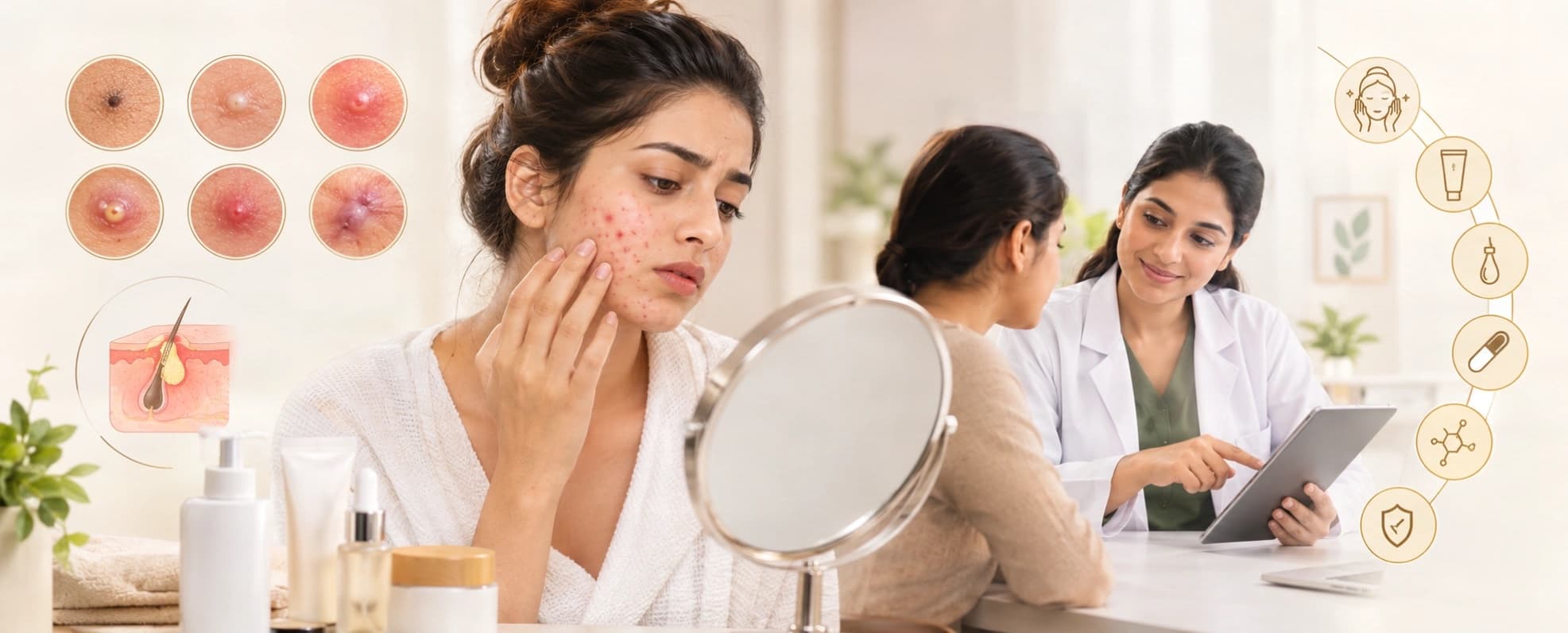
Acne and pimples are part of everyone's worries. They usually start in adolescence and often disappear by the end of it. However, for some people, acne is a lifelong companion. Those less fortunate ones have to fight not only with occasional pimples but also with constant skin issues: painful acne, acne marks, or even scars.
The good news is that almost any acne can be fought with the right therapies and cosmetics. The main thing is to find out which particular cause of your pimples and what treatment method will be the most helpful in your case.
What causes acne and pimples?
Acne is due to the blockage of hair follicles with comedones and an active reaction of the immune system. There are several factors that can contribute to the development of this skin condition:
1. Hormonal changes
The biggest change is associated with puberty since, during this period, there is an increase in androgen hormones. However, the surge of sex hormones can also be in women during ovulation. If a woman has an irregular menstrual cycle due to hormonal problems, there is a high risk of developing adult acne.
2. Excess sebum
In cases of hormonal disturbance, the sebaceous glands may start to produce more oil than usual. This can clog pores and lead to the formation of comedones. Even if your skin is naturally oily, this does not mean that you have poor skin care.
3. Dead cells and blocked pores
The normal turnover of cells in the skin is hampered by blockage of the hair follicles. This leads to the fact that dead cells and comedones clump together, clogging the pores.
4. Microbial infection and inflammation
The most common cause of pimples is associated with the fact that blocked hair follicles provide ideal conditions for the reproduction of microbes. This leads to damage to the wall of the pore, after which bacteria penetrate the surrounding tissue, causing inflammation.
5. Genetic predisposition
Some people are simply born with a tendency to acne. There is no rhyme or reason for this, but people who have it often have close relatives who also suffer from skin problems.
6. Cosmetic and hair care products
If you have sensitive skin, heavy creams or cosmetics that irritate the skin will undoubtedly provoke an allergic reaction. However, sometimes they only provide the perfect environment for the development of pimples. This is especially important to pay attention to when choosing cosmetics and hair care products.
7. Medications and diseases
A hidden reason for the appearance of pimples can be various diseases or the inept use of drugs. In this case, it is essential to contact a dermatologist who will help get rid of the condition.
What Are the Different Types of Acne?
Not all pimples are the same and knowing the class of pimples a given person belongs to can help them identify and treat their problem.
Blackheads
These pimples are also referred to as the open comedones; these are blocked pores that are dark in color.
Whiteheads
Whiteheads are also known as the closed comedones. These pimples are characterized by small bumps on the skin which are white or flesh toned.
Papules
These are pimples that are inflamed and usually painful to touch. They appear as small red bumps on the skin.
Pustules
These pimples have a white or yellow tip and are inflamed pimples with pus. This is characterized by a white head on a red bump.
Nodules and cysts
Nodules and cysts are pimples that are large, inflamed and painful. They also have scars on them and one should seek the advice of a dermatologist at the first sight of such pimples.
Acne treatment and pimples treatment: is there any difference
A pimple is one of the range of lesions associated with acne, a common skin disease. Acne is a skin condition characterized by blackheads, whiteheads, pimples, pustules, nodules and cysts.
Therefore, pimples can be part of the more extensive condition but isolated cases do not necessarily imply critical acne.
How to treat pimples and acne?
The treatment of acne is determined by the type and severity of the condition. While mild forms of pimples can sometimes be treated with proper cosmetics, moderate or severe acne requires a dermatologist expertise.
1. Gentle skincare
A gentle skincare routine is the essential first step in the treatment and prevention of pimples.
The skin should be washed twice a day with a mild cleanser. Avoid rubbing the skin and do not use abrasive cleansing brushes. Only non-comedogenic cosmetics and skincare products should be used to treat pimples. Remember always to remove the makeup before going to bed. Choose a gentle, non-comedogenic sunscreen to protect your skin from UV radiation. Do not touch the face with dirty hands.
Washing and rubbing the skin with abrasive cleaners remove the top layer of healthy cells and disrupt the skin barrier that is resulting in dryness and irritation.
2. Salicylic acid
A beta-hydroxy acid, salicylic acid, is found in many topical treatments. This component is particularly beneficial in comedonal acne as it removes the keratin plug from the follicle.
3. Benzoyl peroxide
This ingredient has proven anti-inflammatory and antibacterial effects; it is used to treat inflammatory acne lesions. It can irritate the skin, causing it to become dry so it should be used with caution.
4. Retinoids
Retinoids are topical agents that decrease the formation of new acne comedones. This drug derivative is commonly prescribed by dermatologists as part of a systematic treatment approach.
5. Prescription treatment
For moderate, severe, persistent, or deforming acne, a dermatologist may prescribe a systemic therapy. Oral treatments for acne can be hormonal or immunomodulatory. This method is appropriate for all types and severity grades of acne, but topical and oral treatments must be selected by a healthcare professional.
Can Chemical Peels Help With Acne?
A chemical peel is sometimes recommended as a component of a dermatologist-monitored acne treatment regimen. Depending on the patient’s case, chemical peels can be used to remove the top layer of skin, and thus, help reduce acne-related texture issues. However the choice of a chemical peel depends on several factors, including the patient’s skin type, acne severity and overall condition of the skin.
Patients should not choose what facial treatment to pursue by the popularity or social media trends.
A dermatologist can help decide if a chemical peel is a right procedure and what type will benefit the patient better.
What About Acne Scars and Acne Marks?
Probably one of the most frequent concerns regarding acne relates to the after-effects, namely acne scars and acne marks. However it is crucial to distinguish between the two terms.
Acne marks usually refer to the changes in skin color that appear after a pimple heals while acne scars involve changes in the skin texture and require different treatment approaches.
Depending on the acne scar type, a dermatologist can recommend a particular course of treatment. For example- laser or subcision treatments, chemical peels, fillers or microneedling may be used alone or in combination with other methods. The best procedure for the patient’s case can only be determined by a dermatologist.
On the other hand, SkinWin also specializes in treating acne scars with various types of acne scar treatments that can be recommended on an individual basis.
Does Popping Pimples Make Acne Worse?
It can. Picking or squeezing pimples can increase the inflammation on your skin and may lead to unwanted acne marks or scars. It can also cause existing pimples to remain inflamed for days, or weeks.
If you are suffering from pimples that are hard or painful to touch, leave them alone and consult with a professional acne treatment service. Do not try to extract or pop your pimples over and over if they continue to occur.
How To Prevent New Pimples
Although you cannot prevent every pimple that appears, there are a few things you can do to help limit new pimples:
- Wash your face twice a day.
- Use oil-free products.
- Do not pick or pop pimples.
- Remove eye and face makeup before going to bed.
- Avoid using hair care products on your face.
- Wash your face after working out.
- Apply a sunscreen daily.
- Stick to a prescribed acne treatment regimen.
- Do not change treatments if pimples continue after a week or two.
Most acne treatments take a few weeks to start working. Many people get frustrated and stop using a treatment because they do not see quick results.
When to See Dermatologist for Acne?
The signs that you may need to see a dermatologist for pimples include:
- Breakouts that are not responding to treatment
- Inflamed or large pimples
- Scarring
- Ineffective over-the-counter treatments
- Negative effect on self-esteem or quality of life
- Large-scale flare-ups
- Persistent adult acne
- A lack of confidence in the accuracy of diagnosis
It is essential to turn to a medical professional in case of noticing signs of destructive or inflammatory acne because severe outbreaks may result in scarring on the skin.
Can Acne Be Cured?
The truth is that acne cannot be completely cured, but it can be successfully treated. In addition, there is no universal solution that would be applicable in all cases, since there are many factors that must be taken into account when selecting a method of combating the condition.
The dermatologist, in determining the course of treatment, takes into account the patient’s age, skin type, breakout pattern, the severity of the condition. The effectiveness of previous treatments and the presence of acne scars.
A person needs to visit a dermatologist in case of serious outbreaks of adult acne as it can bring negative side effects if not properly treated.
The medical professional will prescribe an individual treatment course rather than recommend a number of topical treatments that may irritate the skin.
Clarity Begins With the Correct Diagnosis
Acne is not a fashion that comes and goes. If you often have pimples, acne outbreaks, oily skin or acne scars, the correct diagnosis is of particular importance for the purpose of effective treatment.
The dermatology center SkinWin selects the best way to get rid of acne in your case and uses modern methods to do that. Treating pimples is included in the list of SkinWin's services, however acne-scar tissue is treated in a separate dermatological procedure. An individual approach is being developed for the complicated cases of the condition.
In case your acne does not leave alone, or leaves traces behind, do not waste your time on a series of different creams and means, but consult a dermatologist instead.
Frequently Asked Questions About Acne
There are several reasons for pimples: the blockage of the pore, an increase in the amount of sebum, inflammatory process, and the imbalance of androgens. Such problems may be caused by heredity, taking oral contraceptives, comedogenic cosmetics, and hormonal disturbances.
There is no method to get rid of pimples quickly. It all depends on the stage and severity of the disease. Dermatologists together with personalized skin care can help in getting rid of pimples and prevent new ones.
Having oily skin does not mean having pimples, but it can be a reason for them. Due to increased levels of androgens, male hormones, the activity of the sebaceous glands increases. The increased secretion of oil can be another reason for pimples, but there are other factors, for example, heredity.
Scars from pimples can be removed or reduced with individual treatment. However, the method of treating acne scars depends on the individual case, so it is difficult to say exactly how it will be removed.
It is not recommended to pop pimples because the damaged area of the skin can swell and become inflamed, leaving a scar after healing.
If the pimples are inflamed, large, and persistent or if the acne has left scars that require special care, it is necessary to visit a dermatologist.