Hair Transplant: Treatment, Surgery, Benefits and What to Expect
Author Dr Sonali Gupta & Dr Naina Garg · 20 September 2026 · 8 min read
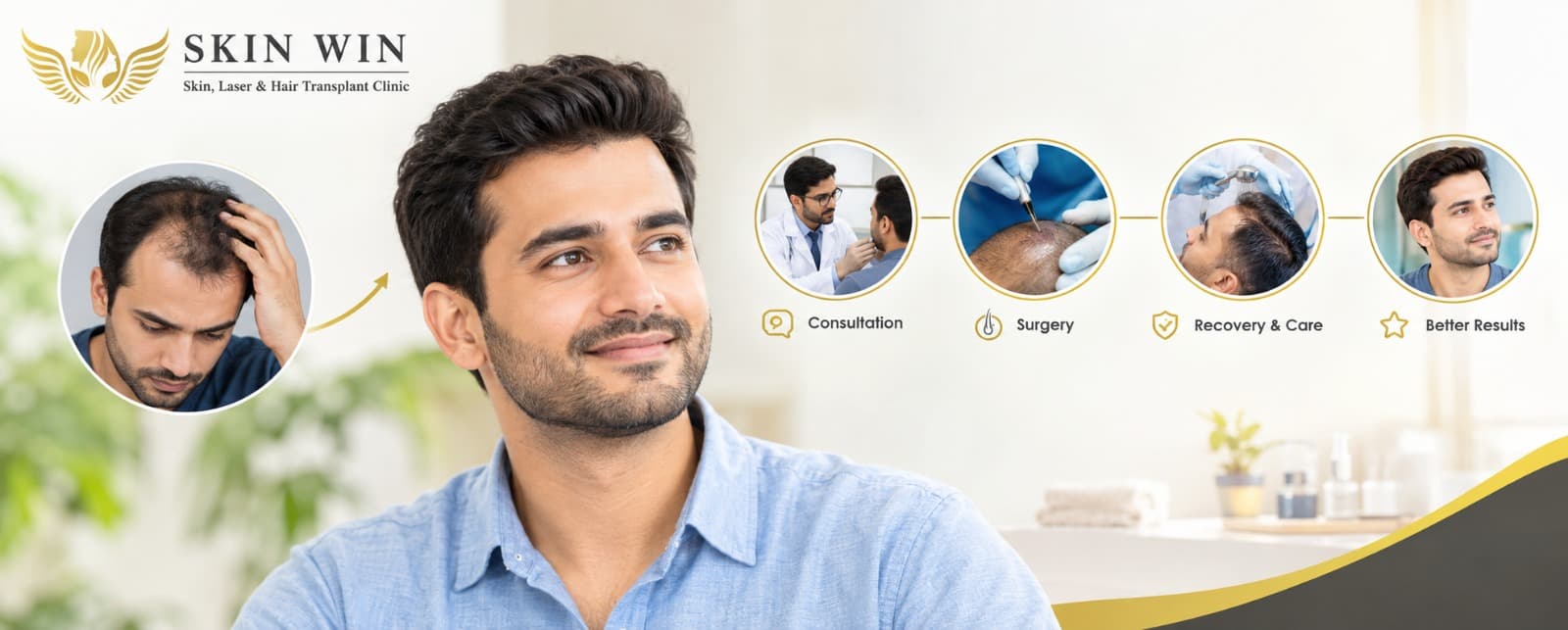
What Is a Hair Transplant?
A hair transplant, also called hair restoration surgery, relocates healthy hair follicles from one area of the scalp to a region that has lost hair. The follicles used are naturally resistant to the hormonal changes that trigger common pattern baldness, so once implanted they continue growing in their new location. The goal isn't just more hair, but a natural-looking hairline and denser growth that makes the best use of the donor area. A hair transplant can generally treat:
- Damaged hairlines
- Thinning hair
- Crown loss
- Male pattern baldness
- Certain types of female pattern baldness
- Scalp scars
Who Can Consider Hair Transplantation?
The doctor determines the most appropriate treatment based on the pattern of hair loss and its underlying cause. Good candidates generally have permanent hair loss and sufficient donor hair. A person may not be a good candidate if:
- The underlying cause of hair loss hasn't been identified
- There is extensive hair loss with a lack of donor hair
- The scalp has an active infection or other untreated condition
- Hair is rapidly thinning or falling out
- The patient has unrealistic expectations
FUE Hair Transplant
FUE (Follicular Unit Extraction) is a popular technique that extracts individual hair follicles from the donor area and implants them at the treatment site. Since single follicles are removed, there's no need for a linear incision or strip of skin — instead, small punctures are made in the donor area, usually the back and/or sides of the head. These minor incisions are barely visible once healed, and when performed correctly, FUE produces outstanding, often undetectable, results.
FUT Hair Transplant
FUT (Follicular Unit Transplantation) is another established technique used for male or female pattern baldness. A strip of skin with hair follicles is extracted from the donor area, then separated into individual follicular units and implanted where hair is thin or absent. FUE has become more popular in recent years, but FUT remains a viable option for many patients — the right choice depends on a consultation with your hair transplant surgeon.
How Does Hair Transplant Surgery Work?
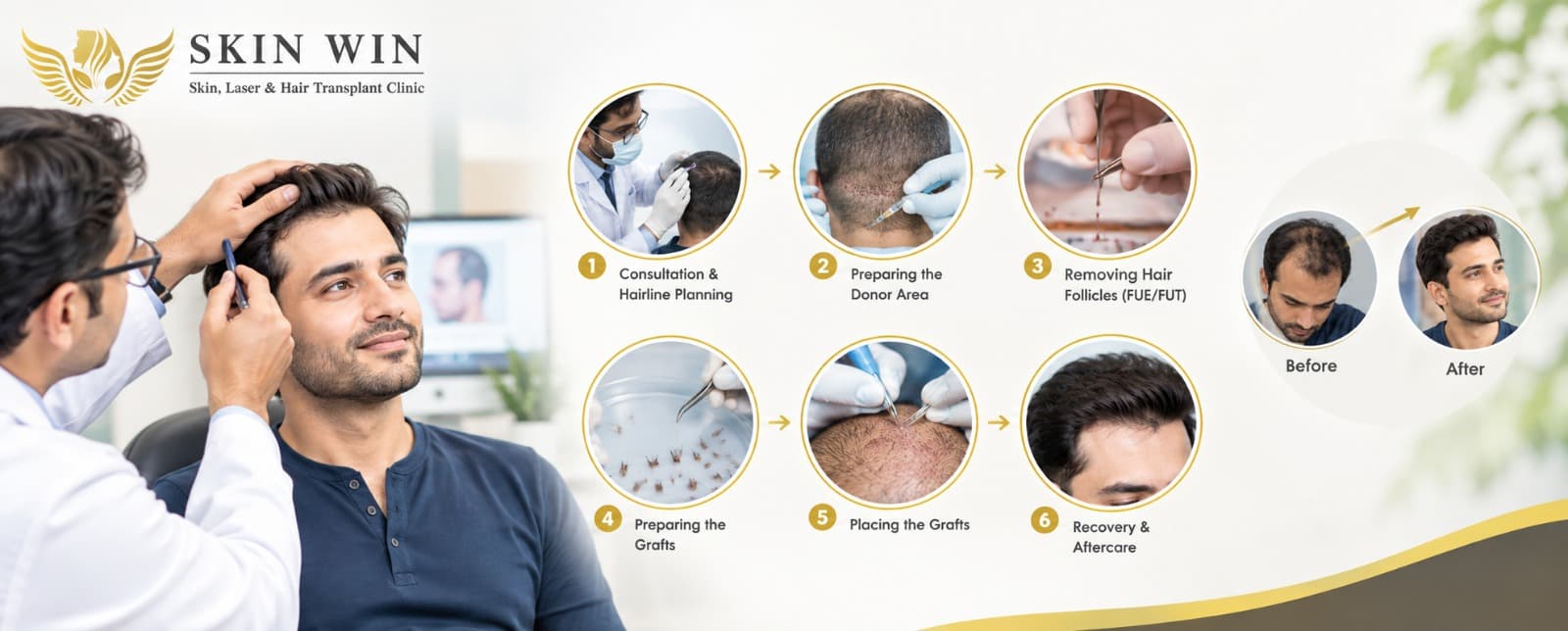
The exact process varies by patient, but generally follows these steps:
- Consultation: the doctor examines your scalp, hair density, donor area and pattern of loss, and reviews your medical history.
- Planning the hairline: a natural-looking hairline is designed around your age, facial structure and existing growth pattern, avoiding an unnaturally square or angular line.
- Preparing the donor area: the area is prepped and local anaesthesia is administered to numb it.
- Removing the hair follicles: individual follicles (FUE) or a strip containing follicles (FUT) is taken from the donor area.
- Preparing the grafts: the follicles are prepared for transplant; the number of grafts needed depends on the size of the area and available donor hair.
- Placing the grafts: small incisions are made at the treatment site and grafts are placed at the correct angle and direction for a natural result.
- Recovery: you're given guidance on caring for the scalp — washing, sleeping position, medication, and activities to avoid in the early days.
Hair Transplant Process at a Glance
What Is Hair Restoration?
Hair restoration is a broader term covering the procedures and treatments aimed at restoring hair growth or replacing lost hair. A hair transplant is one type of hair restoration surgery, but depending on the underlying cause of pattern baldness, other options such as drug therapies, scalp treatments or different surgical procedures may be available. That's why identifying the cause of hair loss is essential to getting the right treatment.
Hair Restoration Treatment: Why Diagnosis Matters
Not all hair loss requires a transplant. Hair loss can occur due to a wide variety of factors, including:
- Genetic hair loss
- Hormonal imbalance
- Nutritional deficiency
- Thyroid disease
- Stress
- Specific drugs
- Scalp disorders
- Autoimmune conditions
Hair Transplant Treatment for Hair Loss
A hair transplant can give the right candidate with permanent hair loss a lasting solution. However, it doesn't mean all future hair loss stops — natural hair surrounding the transplanted area can continue to thin, which is why your doctor may also discuss ways to protect the hair you already have. The number of grafts needed varies from person to person: someone with a slight hairline recession may need far fewer grafts than someone with extensive thinning across the scalp.
Is Hair Transplant Permanent?
A hair transplant is usually permanent, since the follicles used are mostly resistant to the common causes of baldness. That said, effectiveness depends on the donor site's characteristics, the reason for hair loss, the surgeon's skill, and post-surgery care — and other parts of the scalp may continue to shed and thin over time.
How Long Does It Take to See Hair Transplant Results?
Transplanted hair sometimes sheds in the first few months — this doesn't mean the transplant failed, it's a normal part of the healing process. New growth typically becomes visible after a few months, with full results taking up to a year or longer. Your doctor can give you a timeline based on your specific case.
How to Choose a Hair Transplant Clinic
Choosing the right clinic plays a big role in your results. Before deciding, consider:
- Qualifications and experience of the doctor
- Whether the doctor performs the procedure themselves or only supervises it
- Which technique will be used in your case
- How the donor area is evaluated
- The clinic's hygiene and safety standards
- Whether post-surgery care is explained in detail
- Availability of follow-up treatment, if needed
- Whether the clinic sets realistic expectations about results
How to Choose the Best Hair Transplant Doctor
The doctor should first explain why you're losing hair and whether transplantation is right for your case. During your consultation, consider asking:
- What causes my hair loss?
- Am I a suitable candidate for a hair transplant?
- Which technique do you recommend, and why?
- How many grafts might I need?
- What can I realistically expect?
- How will my donor area look afterward?
- What if my own hair keeps thinning?
- What post-operative care will I need?
What Makes the Best Hair Transplant?
There's no single best technique for every patient. A successful hair transplant is personalised — focused on natural hairline design, graft placement, donor hair management and post-surgical care, rather than simply the number of grafts transplanted.
Hair Transplant Surgery: Post-op Care
Most patients resume everyday routines within days, though recovery varies by individual. Swelling, redness, minor discomfort, or small crusts at the incision sites are normal and subside shortly after the procedure. Your clinic's aftercare instructions typically include:
- No rubbing or scratching the scalp
- A specific way of washing or cleansing the hair
- Avoiding strenuous activity for a period of time
- Protection from sunlight
- Taking medication as prescribed
Is Hair Transplant Safe?
Hair transplant surgery is generally considered safe for the right candidate when performed by a qualified, competent professional in an appropriate setting. As with any surgery, there are inherent risks — including infection, bleeding, swelling, scarring, loss of sensation in the donor area, and a few grafts not taking. Discuss your medical history and current medications with your physician before the procedure.
Conclusion
A hair transplant can be an effective solution for people with permanent hair loss and enough donor hair. Modern hair transplant surgery aims for natural-looking results rather than simply maximising graft count. Before visiting a clinic, take time to understand the cause of your hair loss, the treatments available, and what's realistic to expect. A consultation with a professional hair transplant surgeon is the best way to find out whether the procedure is right for you and to build a plan suited to your case.
Frequently Asked Questions
The procedure is done under local anaesthesia, so you shouldn't feel significant pain during surgery, though some discomfort, tightness or tenderness may occur afterward.
It depends on your level of hair loss, donor hair density, hair characteristics and the area needing coverage. A doctor needs to assess your scalp before estimating graft requirements.
Yes, some women with specific types of permanent hair loss can be candidates, but the cause of thinning should be diagnosed first.
Transplanted hair can shed in the early stage after surgery, with new growth developing gradually. Your doctor can explain what to expect at each stage.
Procedure time depends on the number of grafts and technique used — smaller procedures take less time, while larger sessions can take several hours.
Your doctor will advise on timing, which can vary depending on the procedure — follow your clinic's specific instructions.
Many people return within a few days if their job doesn't involve physical activity. Recovery time varies by procedure and type of work.
They're different treatments — medication can help slow or manage certain types of hair loss, while a transplant moves follicles to areas where hair has already been lost. A doctor can advise which option suits your condition.
Results can be unsatisfactory in some cases, including poor graft growth or an unnatural appearance. Proper patient selection, surgical planning, graft handling and aftercare all affect the outcome.
Some people need a further procedure if hair loss continues or they want more coverage. Available donor hair is limited, so long-term planning matters.
A limited donor area can make transplantation more challenging. Your doctor will assess your available hair and explain what level of coverage is possible.
Cost varies with the number of grafts, technique, clinic and doctor's experience. A consultation is the best way to get an individual estimate.