Hair Loss Treatment: Causes, Hair Fall, Thinning, Baldness and What Really Helps
Author Dr Sonali Gupta & Dr Naina Garg · 26 September 2026 · 12 min read
Introduction
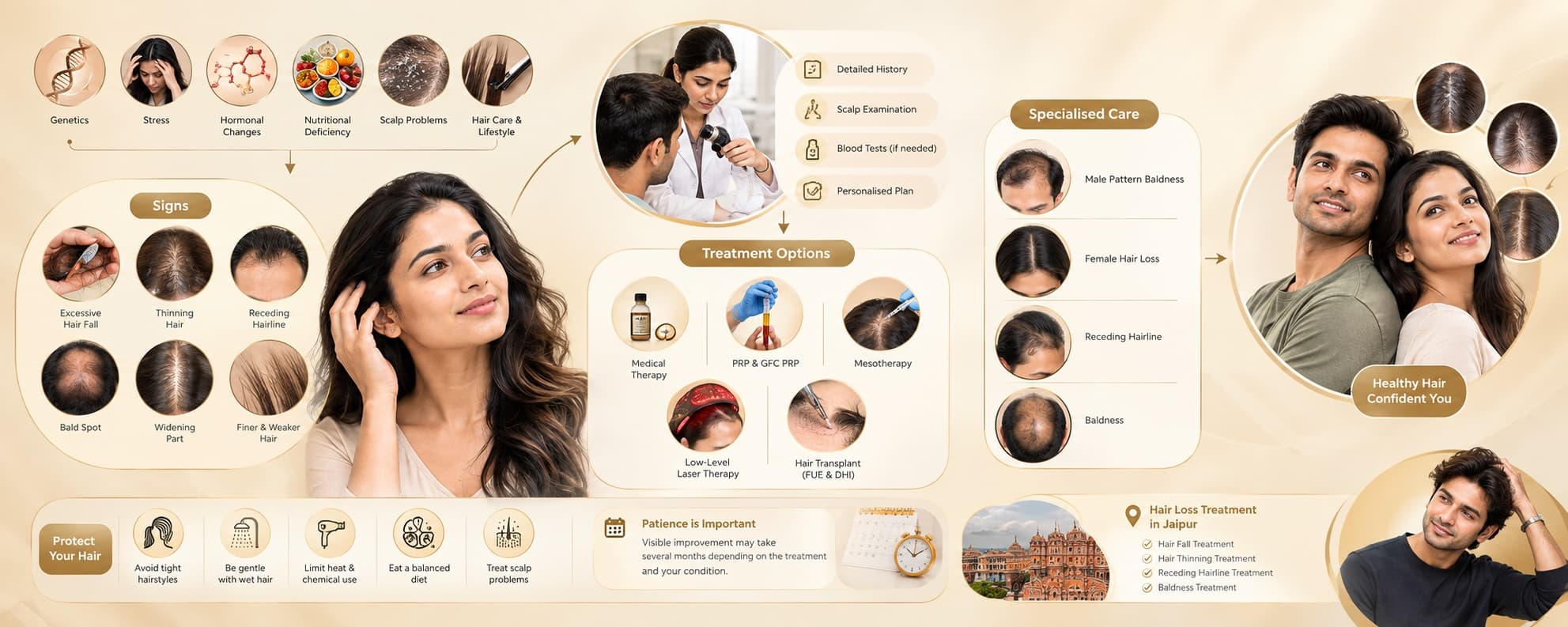
Excessive hair shedding often shows up on the pillow, hair band or comb. In some cases it is non-progressive and resolves on its own within a short time. For others, it can lead to bald patches, thinning, a widening parting and a receding hairline — and it's essential to recognise that not all forms of hair loss should be approached in the same way. Hair loss can have many causes, ranging from hereditary tendencies, hormonal imbalance, nutrition, illness and stress to dermatological conditions, certain drugs and mechanical damage to the hair. Only a specialist can determine the underlying cause and the right therapy, since topical treatments are ineffective against endocrine (hormonal) disorders. At Skin Win Clinic, hair loss management is individualised to the type and stage of the condition, with a wide range of surgical and non-surgical treatments including hair transplants, PRP, GFC PRP, mesotherapy, low-level laser therapy and medical therapy.
What Is Hair Loss?
It is normal to lose some hair every day, as old hairs finish their growth cycle and new hairs replace them. According to the American Academy of Dermatology, losing 50–100 hairs a day can be normal. Problems start when you shed too much hair, or your hair doesn't grow back the way it should. Hair loss comes in different forms, and each can have a different cause — so they shouldn't all be treated the same way just because something has worked for someone else. Common forms include:
- Gradual thinning on the scalp
- Widening centre part
- Receding hairline
- Thinning at the crown
- Bald spots
- Sudden round patches
- Hair shedding while washing or combing
- Hair becoming finer and weaker
What Causes Hair Fall and Hair Thinning?
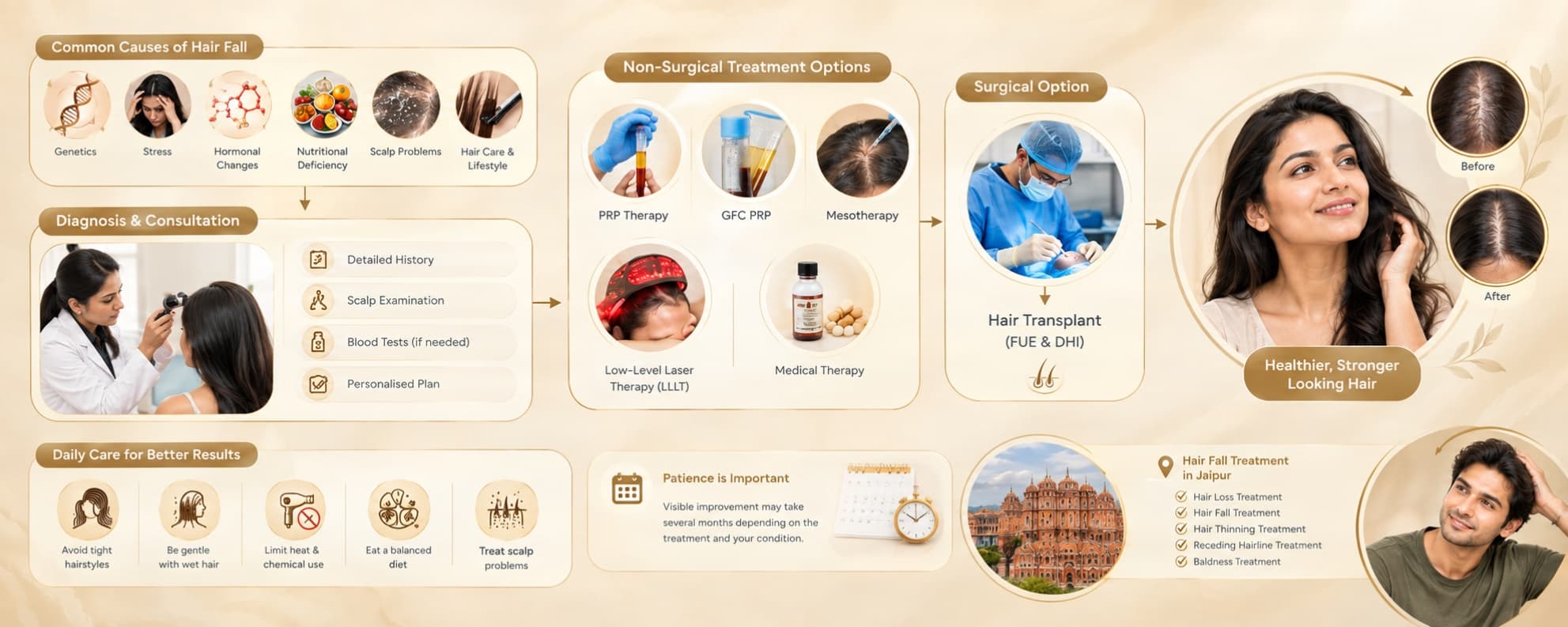
Hair loss rarely comes down to a single issue, but hereditary hair loss is one of the most common reasons for it in both men and women. A number of other causes can also disrupt the hair growth cycle:
- Hereditary hair loss: genes can weaken hair follicles over time. In men, this typically shows as baldness at the front and the vertex (crown) of the head; women tend to lose volume and notice a wider parting. This type of hair loss is called androgenetic alopecia.
- Stress and illness: significant physical or emotional stress can lead to increased shedding, as can serious illness, surgery, a high fever or rapid weight loss. The cause can be hard to pin down, since shedding often begins months after the stressful event has ended.
- Hormone fluctuations: hormones play a significant role throughout the body, so hormonal changes can trigger hair loss in both men and women. In women, it is often linked to pregnancy, the period after childbirth or other hormonal disturbances.
- Nutritional problems: a deficiency of certain vitamins and minerals can lead to hair loss in some people, so a specialist may recommend blood tests if a nutritional or medical cause is suspected.
- Scalp problems: dryness, flaking, inflammation and infections weaken the hair and interfere with its growth, so the underlying scalp condition needs to be treated first.
- Hair care and hairstyles: regular use of hair dryers, straighteners and other heat tools, along with harsh styling, can damage the hair and lead to hair loss. It's important to identify and eliminate these triggers.
Hair Loss Treatment Should Start With the Cause
A common mistake is to choose a treatment based only on how much hair has been lost. A patient with male pattern baldness may need a very different course of action from someone whose hair loss is a side effect of a recent illness, and female hair loss can have several potential causes that should be considered before any treatment is decided. Depending on the circumstances, blood tests or other investigations may be needed to help dermatologists identify the likely cause before deciding whether and how to treat. A hair and scalp examination may include discussion of:
- When the hair loss began
- Whether it is getting worse
- Family history of baldness
- Recent illness or surgery
- Stress and lifestyle changes
- Diet and weight changes
- Any medications or supplements
- Hair care practices
- Menstrual or hormonal issues, if applicable
- Associated symptoms, such as scaling or itchiness
Hair Fall Treatment: What Are the Good Options?
There is no single treatment that is right for everyone. The treatment depends on the diagnosis, the condition of the hair follicles, the amount of hair already present and how long the condition has lasted.
Medical Hair Loss Treatment
Medical treatment may be advised to tackle specific types of hair loss. Minoxidil is one of the common treatments for hereditary hair loss — it can slow hair loss and promote growth in some people, but it needs time and continued use to have a lasting effect. For men with male pattern hair loss, a doctor may also consider prescription treatments such as finasteride after assessing the patient's suitability. It is not a universal solution and should not be taken without medical advice. The aim is not just to prescribe a drug, but to find out whether a treatment is suitable for that particular type of hair loss.
PRP and GFC PRP
Platelet therapies are a non-surgical option for some hair-loss needs. At Skin Win Clinic, PRP and GFC PRP are among the hair-strengthening and growth therapies on offer. They are usually considered as part of a wider hair restoration plan and are not a universal solution for all forms of baldness. Your doctor can assess whether this option is right for your stage of hair loss.
Mesotherapy
Mesotherapy involves introducing selected substances into the skin of the scalp, and can form part of some hair-loss treatment plans depending on the patient's condition. It should be carried out by an expert, with the treatment chosen to tackle the underlying issue rather than used as a one-size-fits-all procedure.
Low-Level Laser Therapy
Low-level laser therapy (LLLT) is another non-surgical approach that can be used for some cases of hair loss, and Skin Win Clinic offers it among its hair-strengthening and growth therapies. It can be used if the doctor believes it is right for the patient's hair and scalp condition.
Hair Transplant
When hair loss has reached a point where medical treatment alone is unlikely to restore the desired level of growth, a hair transplant may be considered. In a hair transplant, healthy hair follicles are taken from a good donor area and implanted into areas affected by hair loss. Modern transplant techniques can create a natural appearance when the hairline, graft placement and donor area are well planned. Skin Win Clinic offers FUE and DHI hair transplant as part of its hair restoration care. However, a transplant isn't right for everyone with hair fall — the doctor must assess the donor area, the degree of hair loss, hair quality and expected progression to decide whether surgery is an option.
Male Pattern Baldness Treatment
Male pattern baldness is one of the most common forms of hereditary hair loss. Because it progresses gradually, many men put off seeking help — yet early assessment can be key, as baldness is best treated while there is still healthy, growing hair in the area. Depending on the cause and progression, a male hair loss treatment plan may involve medical therapy, growth-promoting treatments or hair transplantation. Most cases involve a combination of the following:
- Receding hairline
- Temporal thinning
- Vertex (crown) baldness
- Overall thinning of the hair
Female Hair Loss Treatment
Hair loss often presents differently in women than in men. Possible causes include hereditary hair loss, hormonal fluctuations, nutritional deficiency, underlying medical conditions and shedding after childbirth or miscarriage — so female hair loss treatment should only begin after an appropriate assessment, to ensure the most suitable course of action is chosen. Signs of female hair loss can include:
- Widening centre part
- Loss of density
- Flatter, thinner ponytail
- Increased shedding
- Gradual thinning over the top of the head
Receding Hairline Treatment
A receding hairline is often the first sign of male pattern baldness. It usually begins as thinning along the temples and moves backwards over time — a slow, steady process that can take years. Receding hairline treatment depends on whether hair loss is still active and whether fine hairs are still growing in the area. Based on these factors, either medical treatment or surgical options such as hair transplantation may be advised. The aim of a hair transplant is a natural-looking hairline that suits the patient's age, facial structure and donor supply.
Baldness Treatment: Is It Possible to Regrow Bald Hair?
This is one of the most frequently asked questions, and in many cases the answer depends on the cause and the current condition of the follicles. Some cases of temporary alopecia can be reversed once the trigger is removed. For hereditary hair loss, treatment can help prevent further loss and in some cases even promote regrowth — especially when the condition is recognised early. If an area has been bald for a long time and the follicles can no longer produce quality hair, medication may not give the desired results. In such cases, hair transplantation may be considered if there is sufficient donor hair available. That's why a proper examination matters far more than experimenting with different drugs without knowing how they work.
Hair Loss Treatment in Jaipur: Know When to Consult a Doctor
If you live in Jaipur and are experiencing hair loss, thinning hair, excessive shedding or a receding hairline, don't wait until your hair has fallen out to book a consultation. Skin Win Clinic provides hair restoration and hair treatment at its Jaipur branches in Nirman Nagar and Vaishali Nagar. Reasons to come in for a consultation include:
- Your hair has been shedding for a while
- Your hairline is starting to recede
- More of your scalp is visible
- Your parting is widening
- You have a bald spot
- You've experienced sudden hair loss
- Your scalp is itchy, sore, red or scaly
- Hair loss started after an illness or a major life change
- You're worried because baldness runs in your family
Hair Fall Treatment in Jaipur Should Be Personalised
It's tempting to look for the "best" hair fall treatment and jump straight in — but there is no single hair fall treatment. Two people may be losing the same amount of hair for completely different reasons: one may need treatment for a scalp condition or a temporary shedding issue, while another may have hereditary hair loss. A personal assessment helps to understand what is going on before treatment is decided. At Skin Win Clinic, hair fall treatment is doctor-supervised, with both surgical and non-surgical options chosen according to the condition of the hair, the level of loss and personal requirements.
How to Protect Your Hair While Taking Treatment
To get the best from treatment, it's important to look after the hair you already have during the course of therapy. A few simple rules help maintain healthy hair:
- Avoid tight hairstyles: frequently wearing tight buns or ponytails damages the hair follicles and can lead to hair loss.
- Be gentle with wet hair: strands become more fragile when wet, so take extra care when towel-drying and combing.
- Limit heat and chemical treatments: use straighteners, curling irons and other heat tools as rarely as possible, and remember that bleaching and dyeing also weaken the hair's structure.
- Eat a healthy, balanced diet: protein and a balanced diet help maintain healthy hair, but don't take vitamin supplements at random without a doctor's diagnosis.
- Treat scalp problems: persistent dandruff or itching should be addressed by a dermatologist rather than covered up with cosmetics.
How Long Does Hair Loss Treatment Take to Work?
Hair won't grow back overnight. Most effective hair loss treatments work with the natural hair growth cycle, so depending on the treatment and the cause of hair loss, it may take several months for new hair to appear. Medication, for instance, needs time to show results — minoxidil typically requires six months or more of use to improve hair growth. Hair transplantation is also a gradual process, as the grafted follicles need time to settle into their new location and resume growth. The key point is that enough time must pass before you can properly assess improvements in the hair's appearance and density.
Why Early Hair Loss Assessment Matters
It's easy to miss the subtle signs that your hair is thinning, yet seeking treatment early can help slow the progression of hereditary hair loss. Early signs to look out for include:
- Your parting gradually getting wider
- Your scalp becoming more visible at the crown
- Your hairline starting further back than before
- Your ponytail getting thinner
Take the First Step Before Hair Loss Progresses
Hair fall doesn't necessarily mean you are going bald, but excessive shedding or gradual thinning should not be overlooked. The first step is to identify what is causing the changes. Once the cause is established, your doctor can talk you through the available treatments — whether medical, topical, therapies targeting the scalp and follicles, or surgical options such as a hair transplant. If you're searching for hair loss treatment in Jaipur, hair fall treatment in Jaipur, hair thinning treatment in Jaipur, receding hairline treatment in Jaipur or baldness treatment in Jaipur, a consultation with our professionals will help you understand the options available to you. At Skin Win Clinic, we take a personal approach to every patient, offering non-surgical treatments as well as FUE and DHI hair transplants performed by qualified surgeons. The sooner you understand the cause of your hair loss or thinning, the sooner you can take action.
Frequently Asked Questions
There is no single best treatment for hair loss, as every case depends on many factors. The right option is decided by the pattern and cause of hair loss, and can involve medical therapy, PRP or other growth-stimulating treatments, or hair transplantation.
In cases of temporary hair loss, hair fall can often be stopped for good once the cause is treated. In hereditary hair loss, treatment helps control the rate of hair loss and may help improve density.
No. Suitability is decided by a specialist after evaluating the donor area, the degree of baldness and the overall quality of the hair.
It depends on the diagnosis. Medical therapy is considered for early-stage cases, while hair transplants are performed for suitable candidates.
Male pattern hair loss usually shows as a receding hairline and thinning or baldness at the crown, whereas female pattern hair loss typically appears as thinning over the top of the head or a widening parting. However, both men and women can experience many other patterns of hair loss that need to be evaluated.
Yes. Hair loss is a common concern for both men and women, and treatment is available for both. The suitable treatment is decided after a detailed evaluation of each case. Skin Win Clinic is a leading hair clinic in Jaipur, providing hair restoration and hair treatment at its Nirman Nagar and Vaishali Nagar branches.
Persistent thinning, a receding hairline, patchy baldness or symptoms affecting the scalp should be evaluated by a specialist. This helps determine whether the hair loss is reversible or whether a specific underlying condition is the cause.