FUE vs DHI Hair Transplant: How to Choose the One?
Author Dr Sonali Gupta & Dr Naina Garg · 20 November 2026 · 7 min read
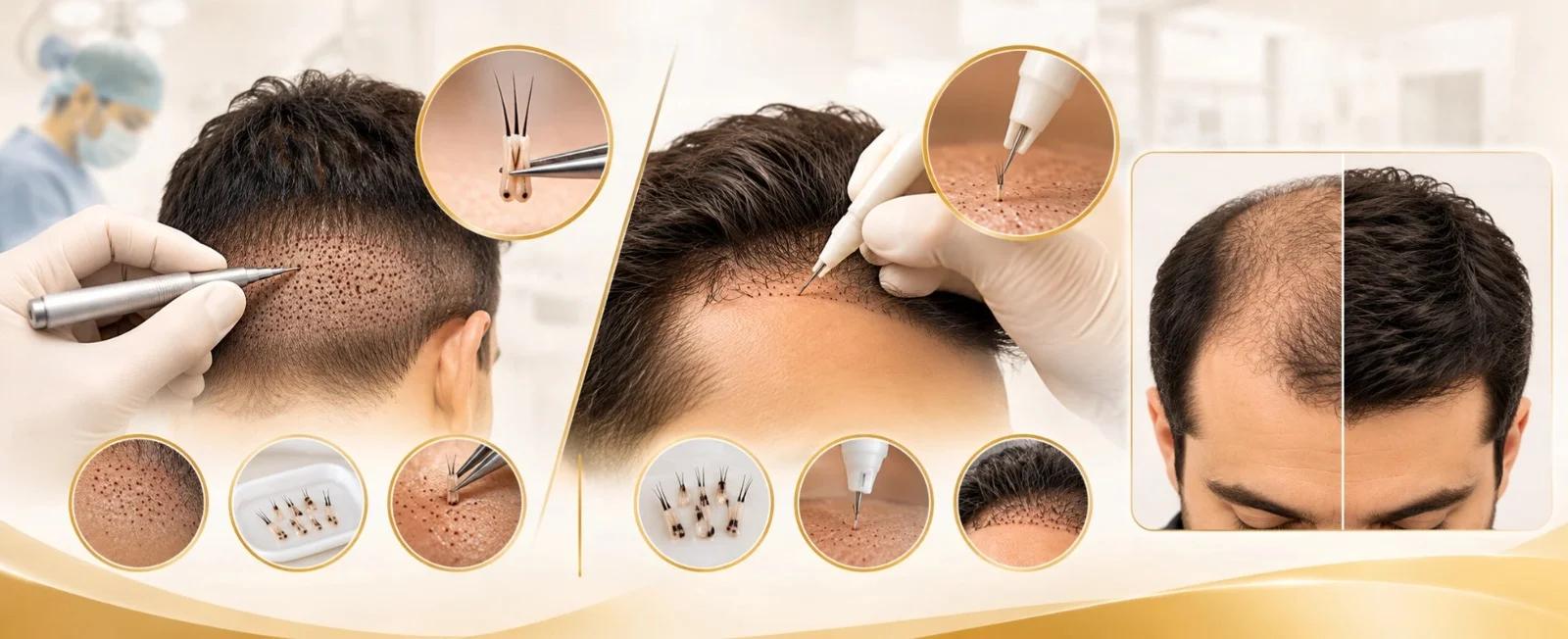
People of all the age groups commonly experience persistent hair loss. This affects their appearance and confidence to a great extent. With the growing scope of medical treatments, hair transplant has become a very convenient option to those who are looking for long-term solution of hair loss. Amongst these techniques are 2 of the widely chosen procedures are Follicular Unit Extraction (FUE) and Direct Hair Implantation (DHI).
Mainly both the procedure includes extracting the hair follicles from any donor part of the body such as back and sides of the scalp and using these healthy follicles to cover the areas majorly affected by hair loss. The major difference is how these follicles implanted again, the tools used, and the procedure followed.
It is crucial to understand the difference in both the procedures in order to choose the correct one which fits best in the individual needs. The blog compares FUE vs DHI hair transplant, advantages and disadvantages of both the procedures, and their significance for personalized needs of the patients.
Follicular Unit Extraction (FUE)
Follicular Unit Extraction (FUE) is one of the hair transplant techniques which involves restoring the individual hair follicles by extracting them from the donor area using a micro-punch instrument that is specialised for the procedure. The next step is to then carefully implant these follicles in the recipient area where hair growth is required.
While performing the procedure a surgeon creates tiny recipient sites in the area of scalp before implanting the follicles into them. This technique does not involve removing of strip or scalp tissue and as a result it helps to avoid any long linear scar on the scalp.
FUE is prescribed in the case where individuals are experience in pattern baldness or hair thinning but has sufficient hair growth in the donor areas. In follicular unit extraction the number of required grafts depends completely on the extent of hair loss and the availability of donor hair.
Patients considering FUE hair transplant in Jaipur should consult an experienced hair restoration specialist to determine whether this technique is suitable for their scalp condition and hair restoration goals.
Advantages of FUE
The advantages of follicular unit extraction include:
Minimal Scarring: Since the procedure does not involve any removal of scalp tissue it does not leave a long linear car on the scalp.
Faster Recovery: The extraction from the donor area is small and therefore it generally heals within a few days allowing the patients to experience a faster recovery and written back to their routine activities right after few days or weeks.
Natural Looking: Since the placement of follicles is very professional, like in FUE hair transplant in Jaipur, it helps in the achievement of natural looking hair growth rather than making it look like any transplant procedure being actually performed.
Suitable for Various Hair Loss Patterns: FUE is useful to restore the hair in various areas including hairline, crown, and temples therefore it supports the hair transplant in different hair loss patterns.
No Stitches: Most of the traditional procedures require stitches after hair transplant but FUE does not require any such stitches to close a donor area incision.
Limitations of FUE
The disadvantages of FUE hair transplant include:
Less Time-Consuming Process: Since FUE includes extracting individual hair follicles from the donor area, it consumes a lot of time in extracting large numbers of grafts when required.
Donor Area Management: Any unprofessional extraction from the donor area or excessive implantation in the receiver area can reduce the hair density in donor area.
Depends On the Experience of Surgeon: The results of FUE depend majorly on the experience and expertise of surgeon who can properly handle the extraction and implantation of hair follicles.
Temporary Side Effects: The patients may experience redness or mild swelling after the procedure during the initial recovery phase.
Direct Hair Implantation (DHI)
Direct Hair Implantation (DHI) is a hair transplant technique that follows extracting individual hair follicles from the donor area and implanting them directly to the recipient area with the help of a specialised instrument known as Choi Implanter Pen.
The main difference of DHI from FUE implantation technique is that in Follicle Unit Extraction, the recipient sites are created before placing the follicles while on the other hand DHI technique directly uses the Implanter Pen and creates the opening along with inserting hair follicle in one step only.
During this procedure of DHI hair transplant Jaipur, the surgeon has entire control of direction, angle, and depth at which the hair follicle is implanted. The technique is basically prescribed when surgeon is creating or refining a natural looking hairline.
Advantages of DHI
Advantages of DHI include:
Hair Placement Under Control: Choi implanter Pan is suitable for the surgeon to control angle, direction, and depth at which hair follicles are implanted.
Hairline That Looks Natural: Since the technique is very professional and each hair follicle is carefully implanted on the scalp in receiver area, it gives a clean and natural appearance of hair line, especially when refining the frontal hairline, it works more effectively.
The Recipient Site Is Not Separately Created: Unlike FUE procedure, in Direct Hair Implantation there is no need to create any separate recipient site before implanting the hair follicle as the complete procedure is performed in one single step using Implanter Pen.
Disadvantages of DHI
Limitations of the direct air implantation include:
Specialisation Is Required: The surgeon performing DHI hair transplantation procedure require a proper training and experience to handle the implanter pen carefully before placing hair follicles.
Higher Treatment Cost: Since the procedure uses specialized instruments, it is more costly as compared to any traditional methods of hair implantation.
Not Always Suitable: This procedure is not suitable for all the types of hair loss pattern and treatment as it works appropriately only in few conditions such as the hair loss in front hairline.
How to Choose the Best One?
The choice between FUE and DHI depends on various factors such as the extent of hair loss, availability of the donor hair, condition of the scalp, and the results which a patient wants to acquire after the procedure. Neither of the procedures can be declared as universally better than the other. It completely depends on the condition at which a patient is getting hair transplant and needs a proper consultation with specialist in hair implantation.
Some of the major factors to be considered include:
Extent of hair loss
The patient seeking for hair transplantation process must consider the extent of hair loss if it is extensive or the affected coverage areas is lesser. Consultation with surgeons can help to access and determine the affected areas in order to choose the better option.
Desired Results
The choice of procedure also depends on what result the patient wants to achieve after here implantation. If the primary target is to restore the frontal hair, DHI may be a better option while on the other hand if there are patches in form of hair loss the FUE maybe taken into consideration.
Budget
The choice of hair transplant may be different depending on the procedure which is followed, the number of grafts that are required, and the expertise that a surgeon holds. The overall treatment plan should we give more attention while selection rather than selecting the cheaper option only.
Availability Of the Donor Hair
After consultation with the surgeon the availability and quality of hair follicles become clear and it plays a major role in choosing the best procedure as per the same.
Conclusion
Hair Implantation is a widely chosen option for the long-term treatment of hair loss amongst all the age groups. It is crucial to understand FUE vs DHI difference in order to choose the best one as per individual needs and wants. At Skinwin, patients considering hair transplant in Jaipur can consult experienced dermatologist to understand the available treatment options. Our team evaluates individual hair loss patterns, donor hair availability and restoration goals before recommending a suitable approach. Whether FUE or DHI is appropriate, selecting the right technique requires proper assessment and personalised treatment planning.